Best MLM Software in Surat for Managing Distributors and Business Networks
How Mobile Order Tracking Improves the Buying Experience A customer orders a storage organizer on a Thursday evening. A confirmation email arrives within seconds, complete

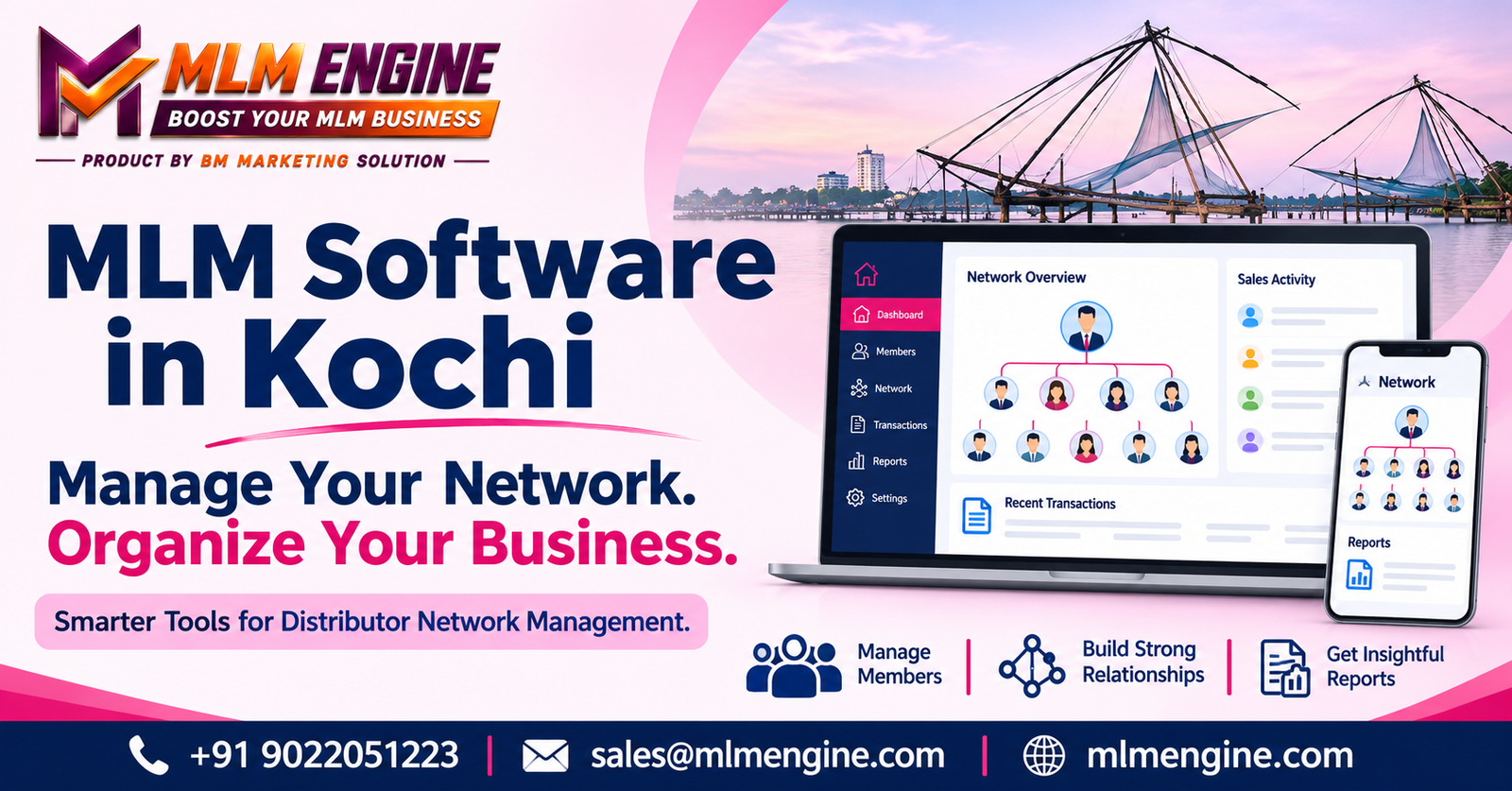
Managing a growing distributor network requires more than maintaining a spreadsheet or updating member details manually. As a business expands, keeping track of registrations, sponsor relationships, sales transactions, commission calculations, and payment records can become increasingly difficult. Information stored across multiple files may also lead to confusion, duplicate entries, and delays in everyday decision-making.
For businesses exploring MLM Software in Kochi, a centralized management system can offer a more organized approach to these responsibilities. By bringing relevant business records and administrative activities together, companies can improve visibility into their distributor networks and establish more consistent workflows.
Kochi is home to businesses operating across different commercial sectors. Organizations that use distributor-based sales, referral networks, or structured membership models may benefit from reviewing how digital tools fit their operational requirements.
This guide explains how network management software works, which features deserve attention, what benefits businesses may experience, and how to evaluate a suitable provider. It also explores how MLM Engine can be considered during the software selection process.
MLM software is a business management solution designed to support organizations that operate through distributors, members, referrals, or structured sales networks. Depending on the provider and configuration, the platform may help manage member registrations, network relationships, sales records, commission rules, payment information, and business reports.
Traditional recordkeeping often separates these activities into different documents or applications. A centralized system can connect related information, making it easier for authorized staff to review records and understand how different business activities relate to one another.
For example, an administrator may need to verify a distributor’s registration, identify the sponsoring member, review a purchase, and check the associated commission calculation. An integrated workflow can make these tasks easier to follow when the relevant features are supported.
Several functions are particularly important when evaluating this type of platform:
Distributor Network Management: Organizes distributor profiles and relationships.
Member Management System: Maintains member information, account status, and access details.
Genealogy Tree Management: Displays the structure of a distributor network.
MLM Sales Tracking: Records sales transactions and related member activity.
MLM Commission Management: Applies configured compensation rules to eligible transactions.
MLM Business Reporting: Presents business information in reports for administrative review.
Available functions differ between providers and packages. Before making a decision, confirm which capabilities are included and whether additional configuration or integration is required.
As distributor-based businesses develop, administrative responsibilities tend to increase alongside membership and transaction volumes. Processes that work for a small team may become difficult to maintain when several people need access to the same information.
Without consistent procedures, businesses may encounter challenges such as:
Incomplete or outdated distributor profiles.
Incorrect sponsor relationships or referral details.
Delays in reviewing sales transactions.
Differences between commission calculations and transaction records.
Difficulty identifying pending or completed payments.
Time-consuming preparation of business reports.
Inconsistent information across departments.
Limited visibility into changes made to important records.
These challenges are not exclusive to Kochi, but they are relevant to local businesses that rely on organized distributor or member networks.
Adopting Network Management Software in Kochi may help address these operational concerns by creating a more consistent way to store, review, and manage business information. However, technology alone cannot resolve every process issue. Accurate data, clearly defined responsibilities, and proper staff training remain essential.
Choosing a platform involves more than comparing feature lists. The most suitable solution should support your existing business structure and make everyday administrative tasks easier to manage.
Accurate member information provides the foundation for an organized network. Look for features that support registration, profile management, contact details, account status, sponsor information, and appropriate user permissions.
A centralized Member Management System can help administrators locate relevant information without searching through multiple documents. Consistent records also make it easier to respond to member enquiries and investigate discrepancies.
During a product demonstration, ask how the platform handles duplicate registrations, profile updates, inactive accounts, and corrections to member information.
Distributor relationships are important in businesses that operate through defined sponsor or reporting structures. A genealogy tree can present these relationships visually, helping administrators understand how members are connected.
Effective Genealogy Tree Management should reflect the structure used by your organization. Depending on your requirements, you may need searchable member relationships, hierarchical views, or options for reviewing network information.
Before selecting a platform, confirm that it supports your compensation structure and network arrangement. A system that cannot represent your actual business model may create additional administrative work rather than simplify it.
Maintaining reliable sales records helps businesses review transactions and understand member activity. Depending on the available features, a platform may record order details, purchase history, transaction dates, and related account information.
With organized MLM Sales Tracking, authorized employees can review recorded activity and investigate differences between sales information and other business records.
Companies that also require inventory management, product dispatch, or order fulfilment should check whether those functions are included. Some providers may require separate tools or third-party integrations to support these activities.
Commission administration can become complicated when a business follows specific eligibility conditions, qualification requirements, or multiple levels of compensation.
MLM Commission Management allows supported business rules to be configured within the platform. Depending on the system, administrators may be able to review calculations, examine transaction details, and generate commission summaries.
When comparing solutions, ask the provider to demonstrate how its system handles your intended compensation plan. Confirm the treatment of adjustments, reversals, eligibility conditions, and calculation errors wherever relevant.
The term Automated Commission Calculation should not be taken as a guarantee of accuracy in every situation. Results depend on correct configuration, reliable source data, and appropriate verification procedures. Software also cannot guarantee earnings, business success, or future payouts.
Payment records require careful organization, particularly when administrators need to distinguish completed transactions from pending payments or investigate discrepancies.
Look for clear transaction histories, payment statuses, reference numbers, and reconciliation options. Businesses should also establish how corrections are recorded and who is authorized to approve relevant changes.
A reliable payment workflow can make MLM Payment Management easier to review during routine administration and month-end checks.
If your organization needs payment gateway integration or wallet functionality, confirm which providers are supported. Transaction fees, settlement arrangements, integration costs, and applicable verification requirements should be discussed before implementation.
Reports help business owners and administrators turn stored information into useful operational summaries. Depending on the platform, available reports may cover registrations, distributor relationships, sales transactions, commissions, payment histories, and member activity.
Well-organized MLM Business Reporting can help teams identify records that require further investigation and prepare information for internal reviews.
Nevertheless, reporting capabilities vary significantly between systems. Request a demonstration of the actual reports available, including their filters, export options, date ranges, and access restrictions.
Distributor information and transaction records should be accessible only to authorized users. For this reason, security and access management deserve the same attention as operational features.
Ask the provider about role-based permissions, backup procedures, data protection practices, maintenance arrangements, and available support. It is also worth confirming how records can be exported if your business changes platforms in the future.
As the organization evolves, its requirements may change as well. Evaluate whether the software can accommodate anticipated adjustments to network size, product offerings, reporting needs, and administrative workflows.
Consider a hypothetical distributor-based business in Kochi that sells household products through an independent sales network. Its administrators need to register members, maintain sponsor relationships, record purchases, review commissions, and answer questions about transaction history.
A structured digital workflow might look like this:
Member registration: An administrator enters the new member’s details and checks the required information.
Sponsor assignment: The member is linked to the appropriate sponsor according to the organization’s established rules.
Sales recording: A purchase is recorded against the relevant account.
Commission processing: Supported compensation rules are applied to eligible transactions.
Record verification: Authorized staff review transaction information and related calculations.
Discrepancy investigation: If a record appears incorrect, the administrator checks the underlying information and makes an authorized correction.
Report preparation: The team uses the available records to prepare summaries and respond to routine enquiries.
This example illustrates a possible workflow rather than a verified customer case study or a claim about a particular software implementation.
The main advantage of centralization is that related information becomes easier to locate and review. Instead of repeatedly copying details between documents, employees can work from a consistent set of records when the system is properly configured.
The practical value of a management platform depends on the organization’s requirements, the quality of implementation, and how consistently employees use it.
Businesses may experience several operational advantages when the selected solution fits their processes.
Better organization of distributor records
Centralized member information can reduce dependence on scattered spreadsheets and separate documents.
Improved visibility into network relationships
A structured network view helps administrators review sponsor connections and understand the arrangement of their distributor teams.
More consistent sales administration
Recorded transactions make it easier to examine purchase histories and investigate differences between related records.
Structured commission reviews
Configured calculation rules and supporting transaction details can make commission administration easier to inspect.
Clearer payment records
Organized transaction histories help authorized staff distinguish payment statuses and investigate discrepancies.
Simplified reporting
Accessible reports can reduce the effort involved in collecting information for routine administrative reviews.
More consistent internal workflows
Defined procedures for registration, record updates, and transaction reviews can help teams handle recurring responsibilities more systematically.
These benefits are potential outcomes, not guaranteed results. Business performance also depends on the sales model, product quality, customer service, staff capabilities, and management practices.
Before committing to a provider, compare the available solutions against a clearly documented set of requirements.
Start by documenting how your organization operates. Identify the roles of distributors, sponsors, administrators, sales teams, and other relevant participants.
A clear picture of the current workflow will help you identify the features that are genuinely necessary.
Separate essential functions from optional improvements. Your checklist might include member management, network visualization, sales tracking, commission calculations, payment records, reporting, and integrations.
This approach helps prevent decisions based solely on attractive demonstrations or long feature lists.
Different platforms support different compensation structures. Explain your intended plan to the provider and request a demonstration using representative examples.
Make sure the calculation rules, eligibility conditions, and reporting requirements can be handled as expected.
Ask the provider to demonstrate everyday tasks rather than presenting only an overview of the interface.
For example, you could request a walkthrough covering member registration, sponsor assignment, sales entry, commission review, transaction investigation, and report generation.
A practical demonstration can reveal limitations that may not be apparent from promotional material.
Determine whether the software needs to connect with your payment gateway, e-commerce website, inventory system, or accounting application.
Confirm compatibility, implementation responsibilities, recurring charges, and any limitations before proceeding.
The initial quotation may not represent the complete cost of ownership. Review setup charges, licensing or subscription fees, customization, integrations, training, maintenance, and future upgrades.
Ask for a clear explanation of what is included in the quoted package.
Clarify how business information is stored, who can access it, how backups are handled, and what options are available for exporting or migrating records.
These details are particularly important when the platform will hold member information and transaction histories.
Even a feature-rich platform can be difficult to use without proper onboarding. Check the availability of documentation, administrator training, technical assistance, and ongoing maintenance.
You should also understand the provider’s process for handling reported issues.
Your needs may change as your distributor network, product range, or internal team develops. Discuss how the system handles additional users, new reporting requirements, and changes to supported business processes.
Avoid paying for unnecessary functionality, but do not overlook requirements that are likely to become important.
Software selection should be accompanied by a review of the laws and regulations relevant to your business model. Depending on the organization and its activities, these may include direct-selling rules, consumer protection, data privacy, tax obligations, and other applicable requirements.
Consult a qualified professional when legal interpretation is necessary. Purchasing software does not automatically make a business model compliant.
A careful evaluation can prevent avoidable expenses and implementation problems. Keep these common mistakes in mind during the selection process.
Choosing only by price: A lower initial cost may not include the customization, maintenance, or support your business requires.
Assuming every platform supports the same compensation plans: Verify the exact plan rules and calculation capabilities.
Ignoring the existing network structure: Confirm that member and sponsor relationships can be represented correctly.
Overlooking reporting requirements: Test the reports your administrators actually need.
Underestimating integration expenses: Establish whether payment, e-commerce, and accounting integrations involve additional charges.
Neglecting security and backups: Understand the provider’s data protection practices and recovery arrangements.
Accepting unclear commission calculations: Request a clear explanation of how calculations are produced and reviewed.
Skipping staff training: Employees need to understand the system and follow consistent data-entry procedures.
Expecting software to guarantee business growth: Technology can support operations, but it cannot replace a sound business strategy.
Making a decision without testing: A practical demonstration is more useful than relying exclusively on marketing claims.
Taking time to examine these areas can help your organization make a better-informed decision.
MLM Engine is one option businesses can evaluate when comparing network management platforms. Its official website, MLM Engine, provides information about its software and available plan options.
The website describes features such as an admin panel, user panel, mobile app, and e-commerce integration. Businesses can also review information about several compensation plan types:
A broader overview is available on the MLM Plans page.
For organizations based in Kochi or elsewhere in Kerala, the next step is to determine whether the available features match their specific operational needs. Consider the network structure, member management requirements, commission rules, transaction workflows, and reporting expectations before selecting a package.
Request a demonstration to understand how the platform handles your intended processes. Current pricing, package inclusions, customization, integrations, implementation timelines, and support arrangements should be confirmed directly with the provider.
Comparing these details against your requirements will help you assess whether MLM Engine is suitable for your business.
Managing a distributor network becomes more demanding as member records, sales transactions, payment information, and administrative responsibilities increase. A well-matched management platform can help bring these activities into a more consistent workflow while improving access to relevant business information.
For companies researching MLM Software in Kochi, the most important consideration is how effectively a platform supports their actual operations. Member management, genealogy tree visualization, sales tracking, commission administration, transaction records, and reporting should all be evaluated against clearly defined requirements.
Businesses comparing MLM Software in Kerala can follow the same approach: document their needs, test realistic workflows, review security practices, and understand the total cost before making a commitment.
MLM Engine is available for businesses that want to explore software options for managing their distributor networks. Visit the official website or contact the team to discuss your requirements and request further information.
Email: sales@mlmengine.com
Phone: +91 9022051223
Website: https://mlmengine.com/
WhatsApp Channel: https://whatsapp.com/channel/0029Vaj8FP577qVKIi7ooC1d
How Mobile Order Tracking Improves the Buying Experience A customer orders a storage organizer on a Thursday evening. A confirmation email arrives within seconds, complete
How Mobile Order Tracking Improves the Buying Experience A customer orders a storage organizer on a Thursday evening. A confirmation email arrives within seconds, complete
Payout Transaction Management: How to Track Pending Payments and Verify Completed Transactions Every business that pays commissions, vendor bills, or partner settlements eventually faces the
How to Manage Multiple Warehouses for a Product Distribution Business A distributor with several warehouses needs more than a stock total. Staff need to know
How to Manage Multiple Warehouses for a Product Distribution Business A distributor with several warehouses needs more than a stock total. Staff need to know
MLM Software in Chennai: How Direct Sellers Can Organize Their Business Operations A growing direct-selling business may have member details in one spreadsheet, order histories
How an MLM Genealogy Tree Works: Visualizing Distributor Networks Step by Step Imagine an administrator opening a spreadsheet on a busy Monday. A distributor has