What an MLM Software Solution Really Does for Your Business
How Learning Management System Software Is Reshaping Digital Training for Every Organization Digital learning has quietly become the backbone of how schools, companies and training

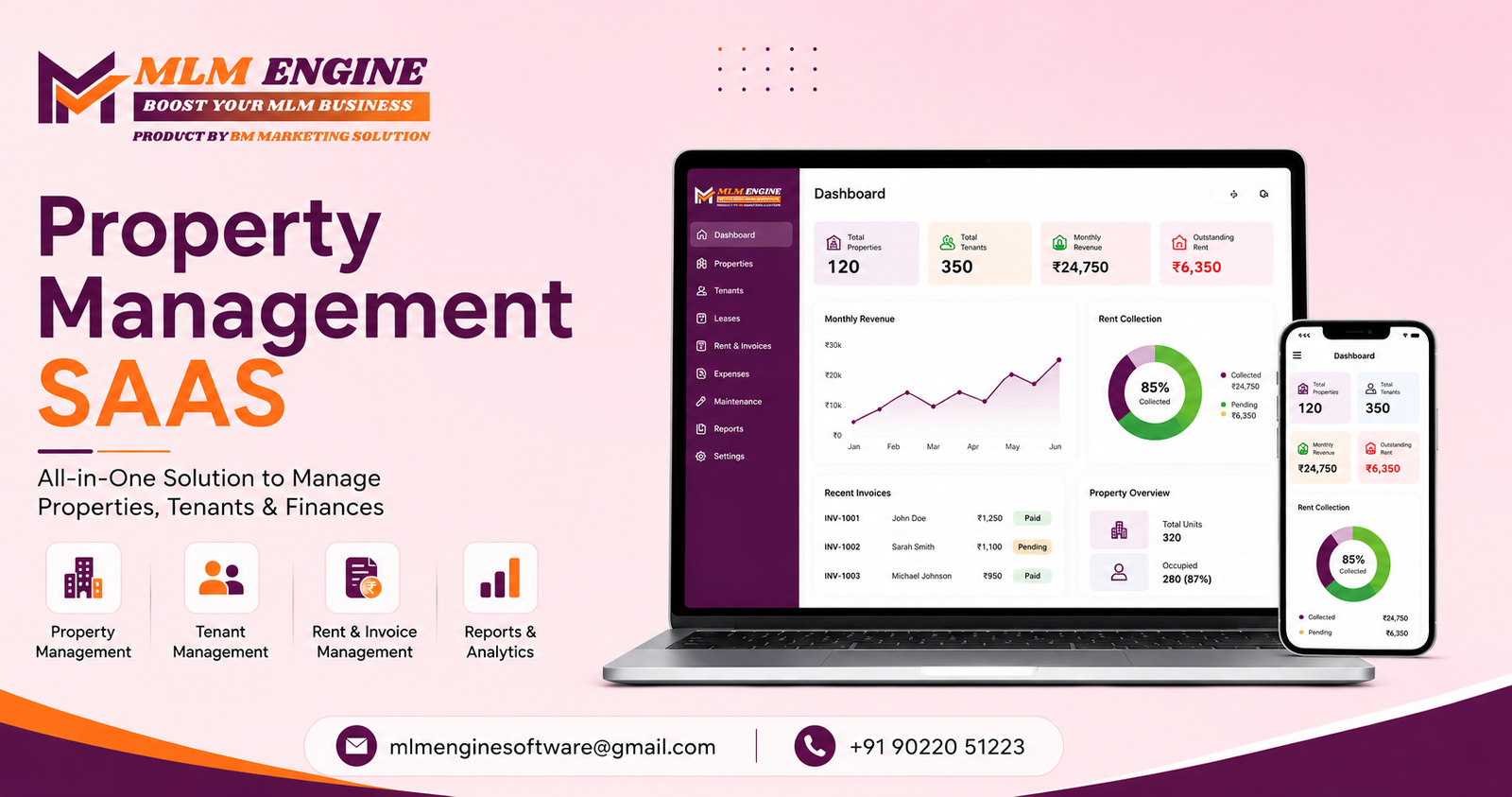
Managing properties sounds straightforward collect rent, handle maintenance, keep tenants happy. But anyone who has actually run a real estate portfolio knows the reality is far messier. Missed payments, overlapping lease renewals, vendor follow-ups, manual spreadsheets, compliance paperwork the list never ends.
That is exactly where Property Management SaaS steps in. It replaces scattered, manual workflows with a single, cloud-based system that keeps everything connected from tenant onboarding to financial reporting. Whether you manage five units or five hundred, the right software changes how your entire operation runs.
This blog breaks down what Property Management SaaS actually does, the features that matter, who it is built for and why more real estate businesses are moving to cloud platforms instead of sticking with outdated methods.
SaaS stands for Software as a Service software delivered over the internet, hosted on the cloud and accessible from any device without the need for installation or local servers.
Property Management SaaS applies this model specifically to real estate operations. It is a platform that centralises every aspect of managing residential, commercial or mixed-use properties tenant records, lease tracking, rent collection, maintenance scheduling, accounting and reporting all accessible through a browser or mobile app.
Unlike traditional desktop software that ties you to one machine, a SaaS platform gives property managers, landlords and real estate companies the flexibility to work from anywhere, with real-time data always at their fingertips.
Before understanding what SaaS solves, it helps to look at what it replaces.
Most real estate businesses still rely on a combination of spreadsheets, paper files, WhatsApp messages and disconnected accounting tools. This setup creates problems that compound over time:
Data lives in silos. Tenant information is in one place, payment records in another, and maintenance logs in a third. When something goes wrong, tracking it down wastes time.
Human errors are inevitable. Manual data entry leads to duplicate records, missed rent escalations, and incorrect invoices all of which affect cash flow and tenant relationships.
Scaling becomes painful. Adding more properties to a manual system does not just add work linearly it multiplies it. Every new unit means more files, more follow-ups and more chances for things to slip through.
Reporting takes days, not minutes. Generating a meaningful financial overview from spreadsheets requires significant effort, which means most businesses operate without a clear, current picture of performance.
Property Management SaaS addresses every one of these pain points directly.
A well-built Property Management SaaS platform is not just a digital filing cabinet. It is an operational engine. Here are the features that define a capable system:
Maintain complete digital profiles for every tenant contact details, ID documents, rental history, lease start and end dates, renewal terms and communication logs. Automated alerts notify managers ahead of lease expirations so renewals never get missed.
Tenants can pay rent through integrated payment gateways UPI, NEFT, RTGS or card-based options. The system automatically records payments, generates receipts and flags overdue accounts. No more chasing payments manually or reconciling bank statements by hand.
Tenants submit maintenance requests through the platform. Managers assign vendors, track job status and close tickets once resolved. The full maintenance history for each property unit is stored and searchable.
Manage a complete inventory of all properties and units occupancy status, property type, floor plans, amenity details and utility records. Get an instant view of what is occupied, what is vacant and what is due for renewal.
Built-in accounting tools handle income tracking, expense recording and GST-compliant invoicing essential for Indian real estate businesses operating under current tax regulations. Generate profit and loss reports, cash flow summaries and owner statements without switching to a separate tool.
Store rental agreements, KYC documents, NOCs and inspection reports digitally. With e-signature integration, agreements can be executed without printing a single page.
Track vacant units, set up listing details and manage inquiries from prospective tenants all within the same platform. Some systems also integrate with listing portals to post availability automatically.
Property owners who have engaged a management company can log in to their own portal to view statements, occupancy reports, and maintenance updates creating transparency without the need for constant manual reporting.
The system sends automated reminders for rent due dates, lease renewals, scheduled inspections and pending maintenance reducing dependency on manual follow-up and improving operational consistency.
Real-time dashboards show occupancy rates, revenue trends, outstanding dues, maintenance turnaround times and portfolio performance. Decision-making becomes data-driven rather than instinct-driven.
Everything tenants, leases, payments, vendors, documents lives in one platform. There are no more disconnected tools or files scattered across devices and people.
Automation handles the repetitive work: payment reminders, receipt generation, overdue alerts and renewal notifications. Property managers spend less time on admin and more time on growth.
Automated calculations, GST-ready invoicing and structured data entry reduce the risk of errors. Compliance with tax and documentation requirements becomes easier to maintain consistently.
Tenants who can pay rent online, submit maintenance requests digitally and receive timely communication are more satisfied tenants. Lower friction in day-to-day interactions improves retention.
Whether you manage 10 units or 1,000, the platform scales with you. Adding new properties does not mean hiring more admin staff the system absorbs the additional workload.
Because it is cloud-based, the platform is accessible from any device, anywhere. Field inspections, tenant calls and financial reviews are no longer tied to an office desk.
Instead of waiting for month-end reconciliation, managers get real-time financial data. This improves cash flow management and makes it easier to identify underperforming properties quickly.
Property Management SaaS is not built for one type of user. It serves a wide range of real estate professionals and organisations:
Independent Landlords managing multiple residential units who want to move away from spreadsheets and manual rent collection.
Real Estate Management Companies handling large residential or commercial portfolios on behalf of property owners.
Co-working Space Operators managing desk and cabin bookings, billing and occupancy for shared workspaces.
Residential Housing Societies that need to manage maintenance, member dues, vendor payments and society communications in one place.
Commercial Property Managers overseeing office buildings, retail spaces and industrial units with complex lease structures.
Real Estate Developers who need to manage post-sales inventory, buyer communication and payment milestone tracking for newly launched projects.
Each of these users has different workflows, but the core need organised, automated, centralised property management remains the same.
Not every Property Management SaaS platform is built the same. Before committing to one, evaluate it on these criteria:
Ease of use. The platform should be intuitive enough that your team can start using it without weeks of training.
India-specific compliance. For businesses operating in India, GST invoicing, TDS handling, and UPI/NEFT payment support are non-negotiable.
Customisation options. Your workflows may differ from defaults. Look for a platform that can be configured to match your processes rather than forcing you to change how you work.
Integration capability. The platform should connect with tools you already use accounting software, communication platforms or payment gateways.
Data security. Tenant data and financial records are sensitive. Check for role-based access controls, encrypted storage and audit logs.
Support quality. SaaS is not just software it is a service. Responsive, knowledgeable support matters especially during onboarding and when issues arise.
Scalability. Choose a platform that can grow with your portfolio without requiring a complete system change at a later stage.
Property management has always been operationally complex. The businesses that thrive are the ones that find ways to reduce that complexity without reducing quality and Property Management SaaS is exactly that tool.
From tenant onboarding to rent collection, from maintenance tracking to financial reporting, the right platform eliminates the gaps, errors and inefficiencies that slow real estate businesses down. It does not just digitise existing processes it fundamentally improves how property management works.
If your real estate business is ready to move away from manual workflows and build a more organised, scalable operation, now is the right time to explore what a purpose-built SaaS solution can do for you.
MLM Engine builds custom SaaS solutions for businesses across industries including property management platforms designed for the Indian real estate market. To explore what a tailored solution looks like for your business, get in touch with the team today.
🌐 Visit: https://mlmengine.com
📧 Email: mlmenginesoftware@gmail.com
📞 Call / WhatsApp: +91 90220 51223
How Learning Management System Software Is Reshaping Digital Training for Every Organization Digital learning has quietly become the backbone of how schools, companies and training
How Learning Management System Software Is Reshaping Digital Training for Every Organization Digital learning has quietly become the backbone of how schools, companies and training
Unilevel MLM Software Explained: A Practical Guide for Direct Sellers INTRODUCTION Direct selling and MLM businesses grow fast and once a distributor network crosses a
Website Development for SEO How the Right Foundation Turns Visitors into Customers Every business today competes for attention online and the difference between a website
Role-Based ERP System: Smarter Security for Every Team If you’ve ever watched an employee accidentally delete financial records because they had access they never should
How to Build a Profitable Mobile Recharge MLM Business From Scratch Picture this someone in a small town needs to top up their phone at
Beyond Generic CRM: What Custom CRM Software Development Really Offers Your Business Introduction Every business handles customers differently. A real estate firm tracks property inquiries
It is a cloud-based software platform that centralises and automates property management tasks including tenant management, rent collection, maintenance tracking and financial reporting accessible from any device via the internet.
Yes. Even landlords managing a small number of units benefit from having organised tenant records, automated payment reminders and digital documentation all of which reduce the time spent on manual admin work.
A well-built Property Management SaaS for the Indian market should include GST-compliant invoicing, TDS tracking, and support for payment modes like UPI, NEFT and RTGS.
Traditional software is installed locally on a device and requires manual updates. SaaS is cloud-hosted, accessible from anywhere, updated automatically and typically operates on a subscription model making it more flexible and cost-effective.
Independent landlords, property management companies, housing societies, co-working space operators, commercial property managers and real estate developers all have workflows that a Property Management SaaS platform can improve.