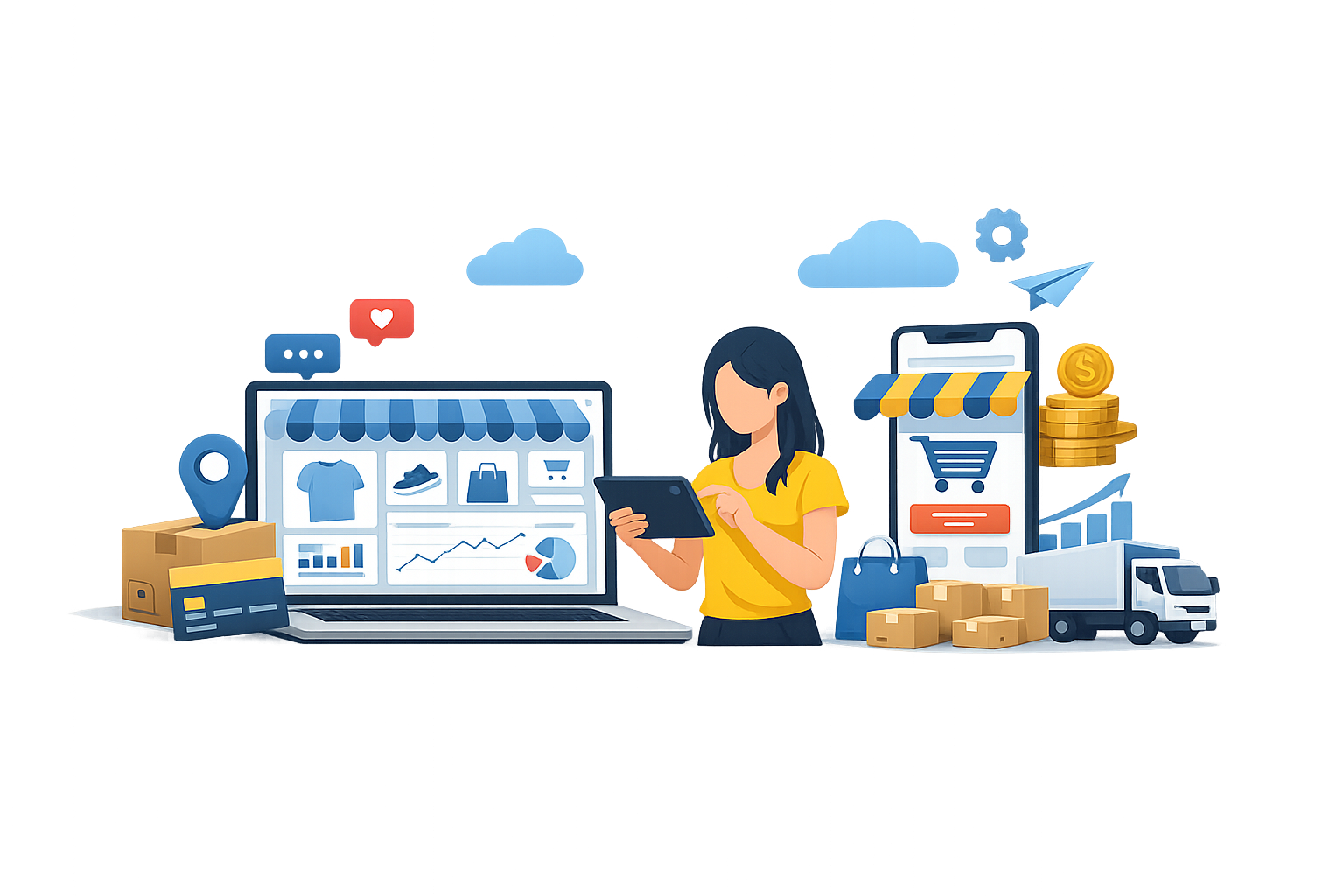
Running an online business today is not just about selling products. Customers expect smooth navigation, fast checkout, personalized recommendations and reliable service every time they visit a website. Because of these expectations, many businesses are moving toward SaaS single vendor ecommerce platforms to create professional and scalable online stores.
A single vendor ecommerce platform is designed for one business owner or one brand to manage and sell products directly to customers. When combined with SaaS technology, the entire system becomes easier to manage, more affordable and highly flexible for growing businesses.
This ecommerce model is becoming popular among startups, fashion brands, electronics sellers, beauty businesses and niche product companies that want complete control over their online presence.
Traditional ecommerce websites often require large investments in development, hosting and maintenance. Businesses usually need technical teams to handle updates, security and system management.
SaaS ecommerce platforms simplify this process by offering cloud-based software that works through the internet. Instead of building everything from the beginning, businesses can use ready-made tools and features to launch their store quickly.
The software provider handles the technical side, while the business owner focuses on products, marketing and customer service.
This approach saves both time and operational costs.
Many businesses no longer want to depend entirely on third-party marketplaces. Selling through a personal ecommerce store provides more freedom and creates stronger customer relationships.
Single vendor stores allow businesses to design their own identity without competing sellers appearing beside their products. Everything from website design to pricing strategy stays under the company’s control.
Businesses can communicate directly with customers, understand buying behavior and build long-term loyalty through personalized experiences.
Managing products, inventory and orders becomes easier because there is only one seller operating the platform.
Without marketplace commissions and unnecessary platform charges, businesses can improve their overall profit margins.
An effective ecommerce platform should provide tools that improve both business operations and customer experience.
Store owners should be able to add products, update prices, manage categories and track inventory without technical complications.
Customers need safe payment systems that support multiple payment options and secure transactions.
Most online purchases now happen through smartphones. A responsive ecommerce platform ensures smooth shopping on all devices.
Search engine optimization helps businesses increase online visibility and attract more customers organically.
Customers appreciate real-time order updates and delivery tracking features.
Discount codes, email marketing, customer rewards and social media integrations help businesses increase engagement and sales.
Cloud technology has changed how ecommerce businesses operate. SaaS platforms provide several advantages that traditional systems often cannot offer.
Businesses can create and launch an online store within a short period without heavy development work.
System updates, backups and technical maintenance are managed automatically by the platform provider.
As customer traffic and orders grow, the platform can scale without affecting website performance.
Store owners can manage their business remotely using laptops, tablets or smartphones.
Modern customers expect more than just products. They want convenience, fast loading websites, simple checkout processes and responsive support.
A SaaS single vendor ecommerce platform helps businesses create these experiences through:
Providing a smooth customer journey often leads to higher customer retention and repeat purchases.
The ecommerce industry continues to evolve with changing customer expectations and technological innovation.
Customers are increasingly using voice assistants to search for products online, making voice-friendly ecommerce important.
Automation tools help reduce manual tasks such as inventory updates, email responses and order management.
Businesses are focusing more on delivering tailored shopping experiences based on customer behavior and preferences.
Digital wallets and instant payment systems are improving the speed and convenience of online transactions.
Although SaaS ecommerce platforms offer many benefits, businesses should still plan carefully before choosing a solution.
Some platforms may restrict advanced customization depending on the subscription plan.
Monthly fees can increase when businesses require additional features or higher scalability.
Businesses rely on the SaaS provider for system stability, updates and technical support.
Despite these challenges, SaaS platforms remain one of the most practical choices for modern ecommerce businesses.
SaaS single vendor ecommerce platforms are helping businesses build stronger online identities while simplifying store management and improving customer experiences. They provide a practical solution for companies that want flexibility, faster growth and complete control over their ecommerce operations.
As online shopping continues to expand globally, businesses that invest in scalable and customer-focused ecommerce systems will have a greater opportunity to succeed in competitive markets.
For companies exploring advanced ecommerce and digital business solutions, MLM Engine provides innovative platforms designed to support modern online business growth and management.