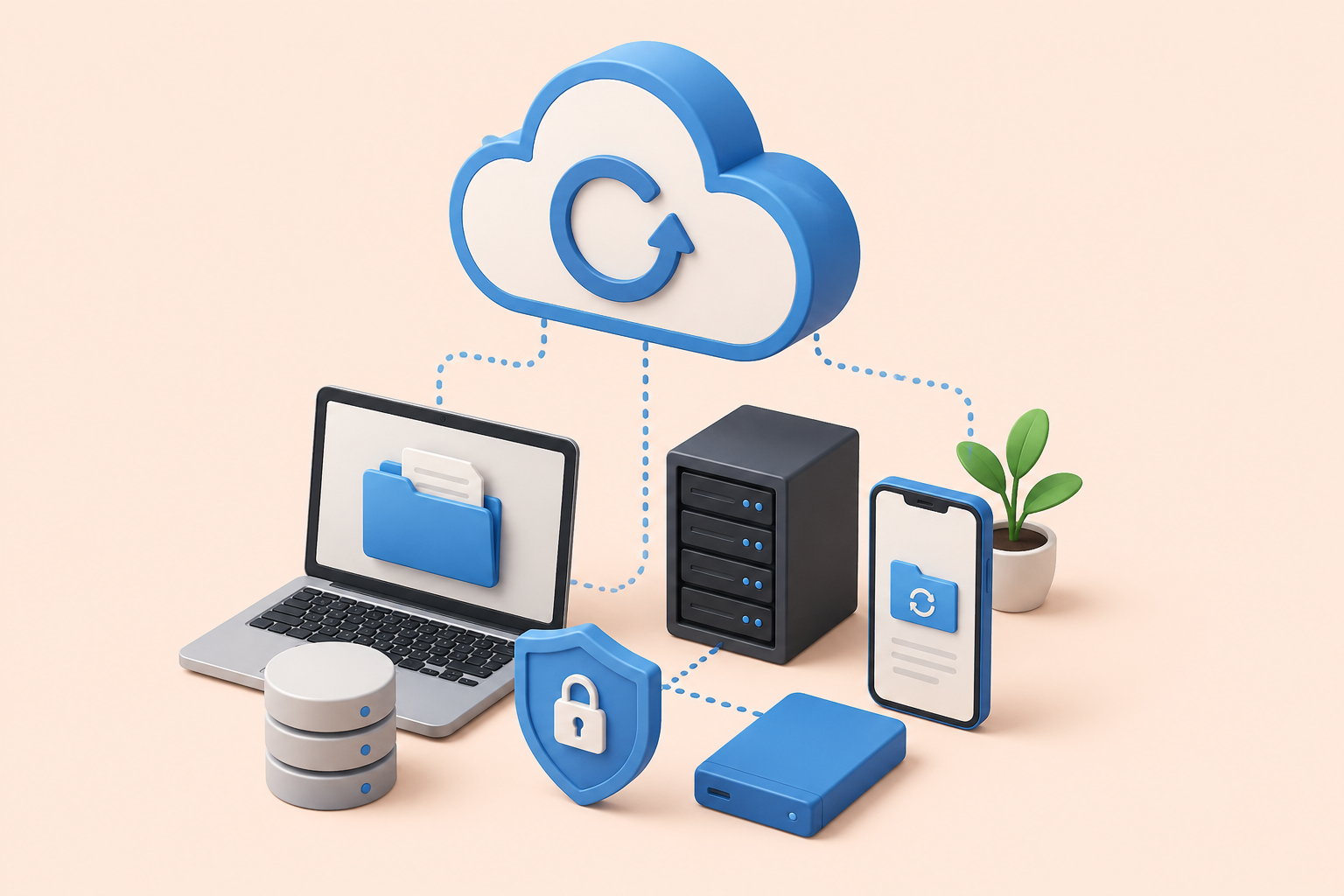
We live in a time where nearly everything important exists in digital form documents, projects, personal memories and business data. But what happens when that data suddenly disappears? System crashes, accidental deletions and cyberattacks can wipe out valuable information in seconds. This is where Cloud-Based Backup and Recovery System prove their worth.
At its heart, a cloud-based backup system creates copies of your data and stores them on secure online servers. Unlike traditional storage options, these servers are not physically tied to your device, making your data far less vulnerable to local failures.
The recovery part ensures that if something goes wrong, your data can be restored quickly and efficiently, helping you get back on track without major disruption.
For years, people relied on external hard drives and local servers for backups. While useful, these methods come with risks hardware damage, limited storage and the need for manual management.
Cloud solutions remove these limitations by offering automated, scalable, and more secure ways to protect data. They eliminate the need for constant supervision and reduce the chances of human error.
Cloud-based systems come with several features that make them highly reliable:
One of the biggest advantages is peace of mind. Knowing your data is safe even if your device fails gives you confidence and security.
Cost-effectiveness is another major benefit. Instead of investing heavily in physical infrastructure, users can opt for flexible pricing models that suit their budget.
Cloud backup also supports modern work environments, especially remote and hybrid setups, where access to data from multiple locations is essential.
Despite its many advantages, cloud backup does have some limitations. A stable internet connection is necessary for smooth operation, especially during data recovery.
Security concerns may arise, particularly when storing confidential data online. However, most providers use advanced protection measures to ensure safety.
It’s also important to keep track of subscription costs over time, as they can accumulate depending on usage.
To make the most of cloud backup systems, it’s important to use them wisely:
As technology evolves, cloud backup systems are becoming more advanced. Features like AI-driven monitoring, faster recovery speeds and improved security protocols are shaping the future of data protection.
These innovations will make cloud solutions even more efficient and accessible for users across the globe.
Data loss can be unexpected, but it doesn’t have to be devastating. A cloud-based backup and recovery system acts as a safety net, ensuring your valuable information is always protected and recoverable.
In a digital world where data is everything, investing in a reliable backup solution is one of the smartest decisions you can make. To explore more advanced solutions and tools, you can visit https://mlmengine.com/ for additional insights and services.