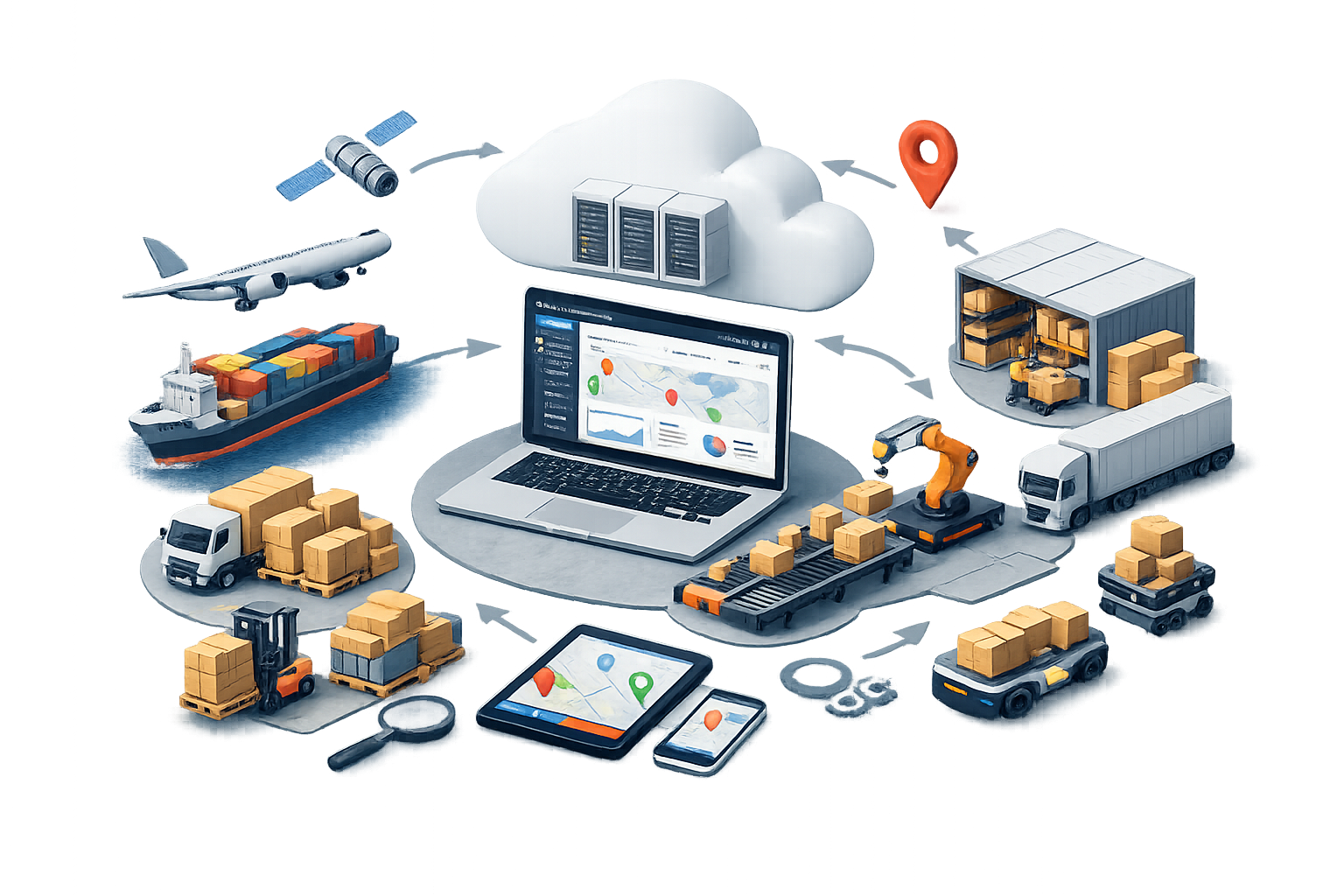
The SaaS logistics platform industry has experienced a massive digital transformation over the last decade. Businesses are no longer relying solely on traditional systems to manage transportation, warehousing, inventory and distribution. Instead, organizations are adopting cloud-based logistics solutions to improve operational efficiency, reduce costs and gain real-time control over their entire supply chain network.
As customer expectations continue to rise and global markets become more competitive, companies need agile and intelligent solutions that can quickly adapt to changing business demands. SaaS (Software-as-a-Service) platforms are helping businesses modernize their logistics operations with cloud-based technology, automation and advanced analytics.
A SaaS-based logistics and supply chain platform is a cloud-hosted software solution designed to manage and optimize logistics operations, supply chain workflows, transportation management, warehouse activities and inventory tracking through an internet-based system.
Unlike traditional on-premise software, SaaS platforms do not require heavy infrastructure investments or complex installations. Businesses can access the software through a web browser or mobile application while the service provider handles maintenance, security updates and scalability.
These platforms usually offer features such as:
The ability to centralize operations and access data in real time makes SaaS platforms an essential tool for modern supply chain management.
The logistics industry is evolving rapidly due to increasing customer expectations, global trade expansion and digital transformation. Traditional systems often struggle to handle modern supply chain challenges such as delayed deliveries, inventory inaccuracies and lack of visibility.
SaaS-based platforms solve these issues by providing flexibility, automation and intelligent decision-making capabilities.
One of the biggest challenges in logistics is the lack of transparency. Businesses need to know where their shipments are, how inventory levels are changing and whether operations are running efficiently.
SaaS platforms provide real-time dashboards and tracking systems that allow businesses to monitor every stage of the supply chain. This visibility helps organizations make faster decisions and avoid costly disruptions.
Traditional logistics software often requires expensive hardware, licensing and maintenance costs. SaaS solutions eliminate these expenses by offering subscription-based pricing models.
Businesses only pay for the services they use, making the platform affordable and scalable for companies of all sizes.
As companies expand, their logistics operations become more complex. SaaS platforms are highly scalable and can easily accommodate increased orders, new warehouses, additional suppliers and growing customer demands without major system upgrades.
This flexibility allows businesses to grow without worrying about software limitations.
Supply chain operations involve multiple stakeholders including suppliers, distributors, warehouse teams, transportation providers and customers.
Cloud-based platforms improve communication and collaboration by giving all stakeholders access to shared data and updates. This reduces delays, minimizes errors and increases operational efficiency.
A successful SaaS-based logistics and supply chain platform should include advanced features that streamline operations and improve productivity.
A TMS helps businesses manage freight movement, carrier selection, route planning and shipment tracking. It reduces transportation costs and improves delivery performance.
Warehouse management tools improve inventory handling, order picking, stock control and warehouse space utilization. These features help businesses reduce storage costs and increase operational efficiency.
Inventory optimization tools provide accurate stock visibility and automated replenishment processes. This prevents overstocking and stock shortages.
SaaS platforms can integrate with eCommerce stores, ERP systems, CRM software, accounting platforms and third-party logistics providers. This creates a connected and seamless operational ecosystem.
SaaS-based logistics platforms are useful across multiple industries because every business depends on efficient supply chain operations.
Online retailers use SaaS logistics platforms to manage inventory, process orders and track deliveries in real time. Faster shipping and accurate order fulfillment improve customer satisfaction.
Manufacturers rely on supply chain platforms to manage raw materials, production schedules and supplier coordination. Better planning reduces downtime and operational delays.
Healthcare organizations need strict inventory control and temperature-sensitive logistics management. SaaS platforms help maintain compliance and ensure timely deliveries.
Food businesses use logistics platforms for route optimization, cold chain monitoring and inventory tracking to reduce waste and maintain product quality.
Although SaaS platforms offer many advantages, businesses may still face some challenges during implementation.
Since SaaS platforms store data in the cloud, businesses may worry about cybersecurity risks and data privacy. Choosing a reliable provider with strong security measures is essential.
Integrating new software with existing systems can sometimes be challenging. Proper planning and API support are necessary for smooth implementation.
Teams may require training to adapt to new workflows and technologies. User-friendly interfaces and proper onboarding can reduce resistance to change.
The future of logistics is becoming increasingly digital, automated and data-driven. Technologies such as AI, machine learning, blockchain, IoT and predictive analytics will continue to reshape supply chain operations.
SaaS platforms are expected to play a major role in enabling:
As businesses continue to prioritize speed, efficiency and customer satisfaction, SaaS-based logistics platforms will become an essential component of operational success.
SaaS-based logistics and supply chain platforms are transforming how businesses manage operations in a highly competitive market. By offering real-time visibility, scalability, automation and cost efficiency, these cloud-powered solutions help organizations streamline workflows and improve overall supply chain performance.
Companies that adopt modern SaaS logistics solutions can respond faster to market demands, reduce operational costs and deliver exceptional customer experiences. As digital transformation continues to accelerate, investing in a smart logistics platform is no longer an option it is becoming a necessity for sustainable business growth.
To explore advanced SaaS solutions for logistics and supply chain management, visit MLM Engine