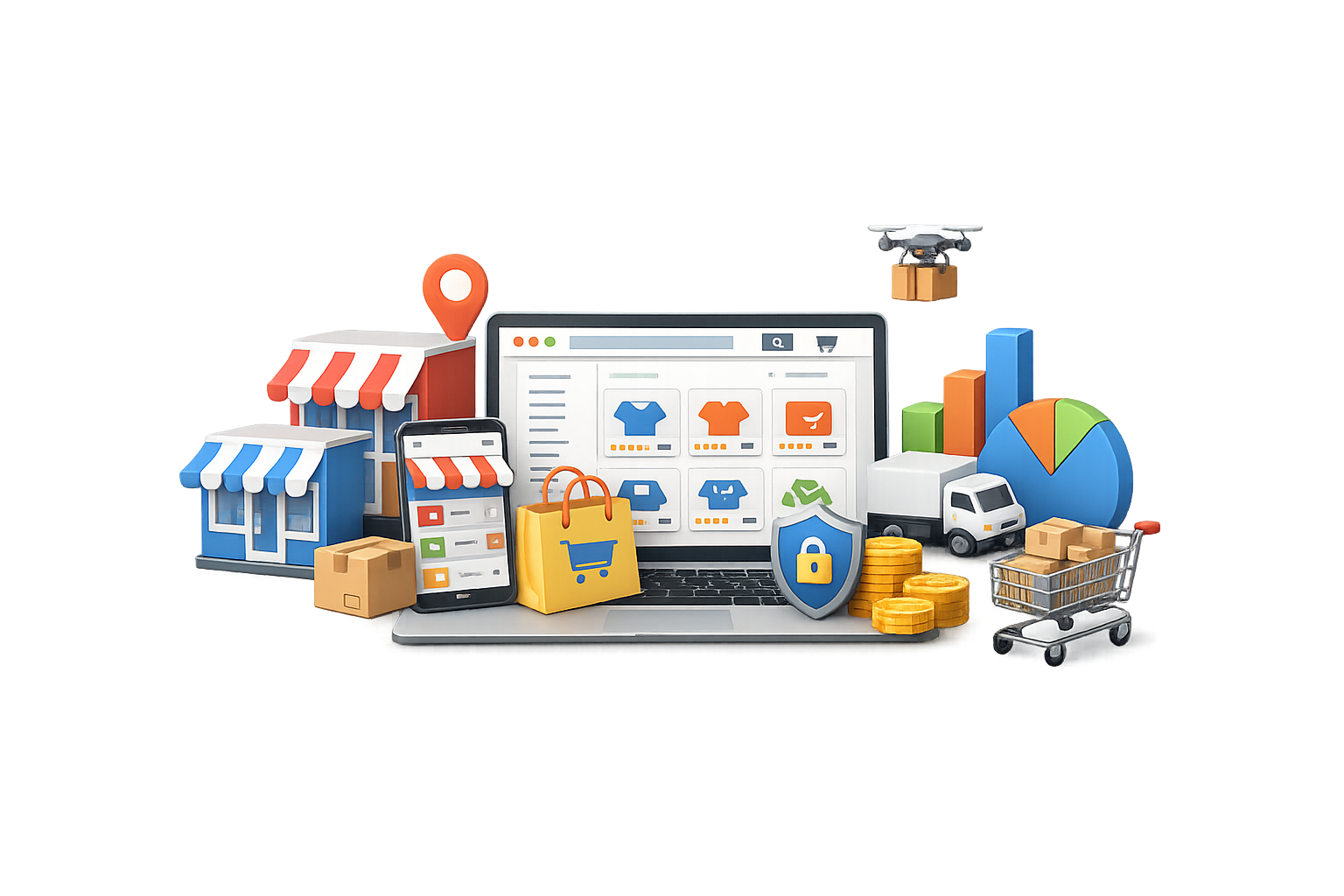
The ecommerce world is no longer limited to single online stores. Modern consumers want variety, competitive pricing, fast delivery and the convenience of buying everything from one place. This shift in customer behavior has made SaaS multi vendor ecommerce platforms one of the fastest-growing business models in the digital economy.
A multi vendor marketplace allows multiple sellers to showcase and sell products through a single platform, while SaaS technology makes the entire system cloud-based, scalable and easy to manage. Together, they create a powerful solution for startups, enterprises and entrepreneurs who want to build large-scale online marketplaces without dealing with complicated technical infrastructure.
A SaaS multi vendor ecommerce platform is an online marketplace system where many vendors can register, create stores, upload products and manage orders from their own dashboards. The platform owner controls the marketplace, manages commissions, monitors vendors and maintains the overall system.
Unlike traditional ecommerce websites that focus on a single business, multi vendor platforms create a shared ecosystem where buyers can access products from different sellers in one place.
The SaaS model removes the burden of hosting, software maintenance and manual updates because everything is managed through cloud-based services.
Businesses are increasingly moving toward SaaS-based marketplace solutions because they offer flexibility, speed and long-term scalability.
Building a marketplace from scratch can take months of development. SaaS solutions help businesses launch faster with ready-to-use systems and essential ecommerce features.
Traditional software development requires significant investment in servers, maintenance and technical teams. SaaS platforms operate on subscription or licensing models, reducing initial expenses.
As traffic, products and vendors grow, the platform can expand without major infrastructure changes.
Marketplace owners can control vendors, products, payments, commissions and customer activity through a single admin dashboard.
A successful marketplace requires advanced functionality that benefits both sellers and customers.
Each vendor receives independent access to manage inventory, orders, pricing and sales reports.
Sellers can upload products, add descriptions, update stock and organize categories efficiently.
Integrated payment gateways simplify transactions for customers and automate vendor payouts.
Customers can monitor shipments and receive updates in real time.
Customer feedback improves transparency and helps maintain product quality across the marketplace.
Modern marketplaces must provide smooth shopping experiences across smartphones, tablets and desktops.
Joining a multi vendor marketplace offers several benefits for sellers.
Vendors can immediately reach an existing customer base instead of building traffic independently.
The marketplace owner handles updates, hosting and platform maintenance.
Sellers can focus more on products and customer service instead of managing technical operations.
Smaller businesses gain exposure alongside established sellers within the same marketplace.
Marketplace operators also gain strong business advantages.
As more vendors join the platform, product variety increases, which naturally attracts more customers and strengthens the marketplace ecosystem.
Despite its advantages, managing a marketplace requires proper planning and operational control.
Different sellers may provide different service standards. Maintaining consistency is essential for customer trust.
Handling shipping and returns from multiple vendors can become complicated without organized systems.
Marketplace owners must manage disputes, refunds and communication between customers and vendors efficiently.
Vendors selling similar products may create pricing competition that requires fair marketplace policies.
Strong automation tools and structured workflows help overcome these operational challenges.
The future of ecommerce marketplaces is driven by innovation and customer convenience.
Customers increasingly expect same-day or next-day delivery services.
Marketplaces are integrating with social media platforms to drive direct sales.
Automated systems improve inventory forecasting, vendor management and customer engagement.
Multi-language and multi-currency support allow marketplaces to reach international audiences more effectively.
Before launching a SaaS multi vendor ecommerce platform, businesses should evaluate:
Choosing the right solution helps businesses build a reliable and future-ready marketplace.
SaaS multi vendor ecommerce platforms are changing the future of digital commerce by creating scalable, flexible and highly profitable online marketplaces. They allow businesses to connect multiple vendors and customers through one centralized system while reducing technical complexity and operational costs.
As ecommerce continues to evolve, businesses that invest in smart marketplace technology will have greater opportunities for growth, customer retention and long-term success.
To explore advanced solutions for building your own ecommerce marketplace, visit MLM Engine.