In today’s fast-growing digital economy, e-commerce businesses are no longer just about setting up a simple online store. They are evolving into complex ecosystems that serve multiple brands, sellers and customers under a single platform. One of the most powerful architectures enabling this transformation is the multi-tenant e-commerce platform.
But what exactly does “multi-tenant” mean in e-commerce, and why is it becoming so important? Let’s break it down in simple terms.
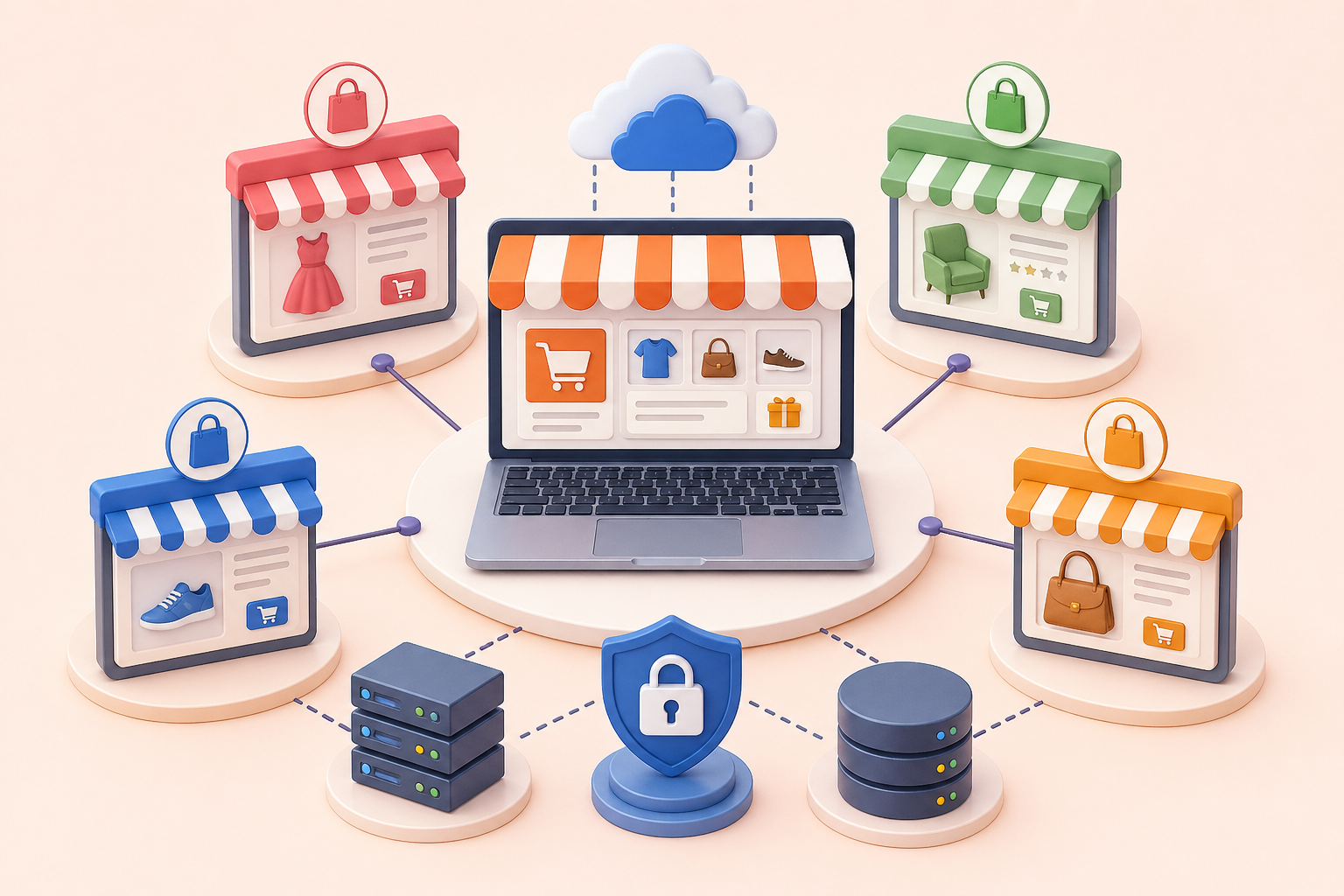
A multi-tenant e-commerce platform is a software architecture where a single instance of an application serves multiple customers (called tenants). Each tenant operates independently, but all share the same underlying infrastructure, database and application code.
Think of it like a shopping mall:
In e-commerce terms, each tenant could be:
In a multi-tenant architecture, the system is designed so that:
There are typically three approaches to data management:
The choice depends on scalability, security and business requirements.
A well-designed multi-tenant system includes:
Each business operates independently without interfering with others’ data.
Platform administrators can manage all tenants from a single dashboard.
Each tenant can personalize their store’s design, logo and theme.
As new tenants join, the system scales without major architectural changes.
Different users (admins, sellers, customers) have different permissions.
Instead of running separate applications for each business, resources are shared, reducing infrastructure and maintenance costs.
New tenants can be onboarded quickly without setting up a new system from scratch.
Updates, bug fixes and new features are deployed once and reflected across all tenants.
The system can support thousands of stores without significant performance issues when designed properly.
Server and database resources are optimized across multiple tenants.
While powerful, multi-tenant systems also come with challenges:
Ensuring strict separation of tenant data is critical.
One tenant’s heavy usage should not affect others.
Designing a scalable and secure multi-tenant system requires careful planning.
Too much customization per tenant can complicate maintenance.
Multi-tenant e-commerce platforms are widely used in:
These platforms empower thousands of businesses to operate online without building their own infrastructure.
The shift is driven by three major trends:
Instead of investing heavily in custom software, businesses now prefer ready-to-use platforms that grow with them.
A multi-tenant e-commerce platform is not just a technical concept it’s a smart business strategy for scaling in today’s competitive digital market. By allowing multiple vendors or businesses to operate on a shared infrastructure, it reduces costs, simplifies management and accelerates growth.
As the demand for flexible and scalable online solutions continues to rise, multi-tenant architecture is becoming a preferred choice for startups as well as established enterprises. It enables faster deployment, easier maintenance and the ability to support multiple businesses under one ecosystem.
If you’re exploring ways to build or upgrade your e-commerce system, choosing the right platform is crucial. Solutions like MLM Engine offer advanced tools that support scalable business models and automation. You can explore more about their offerings here: https://mlmengine.com/
In the long run, adopting a multi-tenant approach can help businesses stay agile, reduce operational complexity and prepare for future growth.