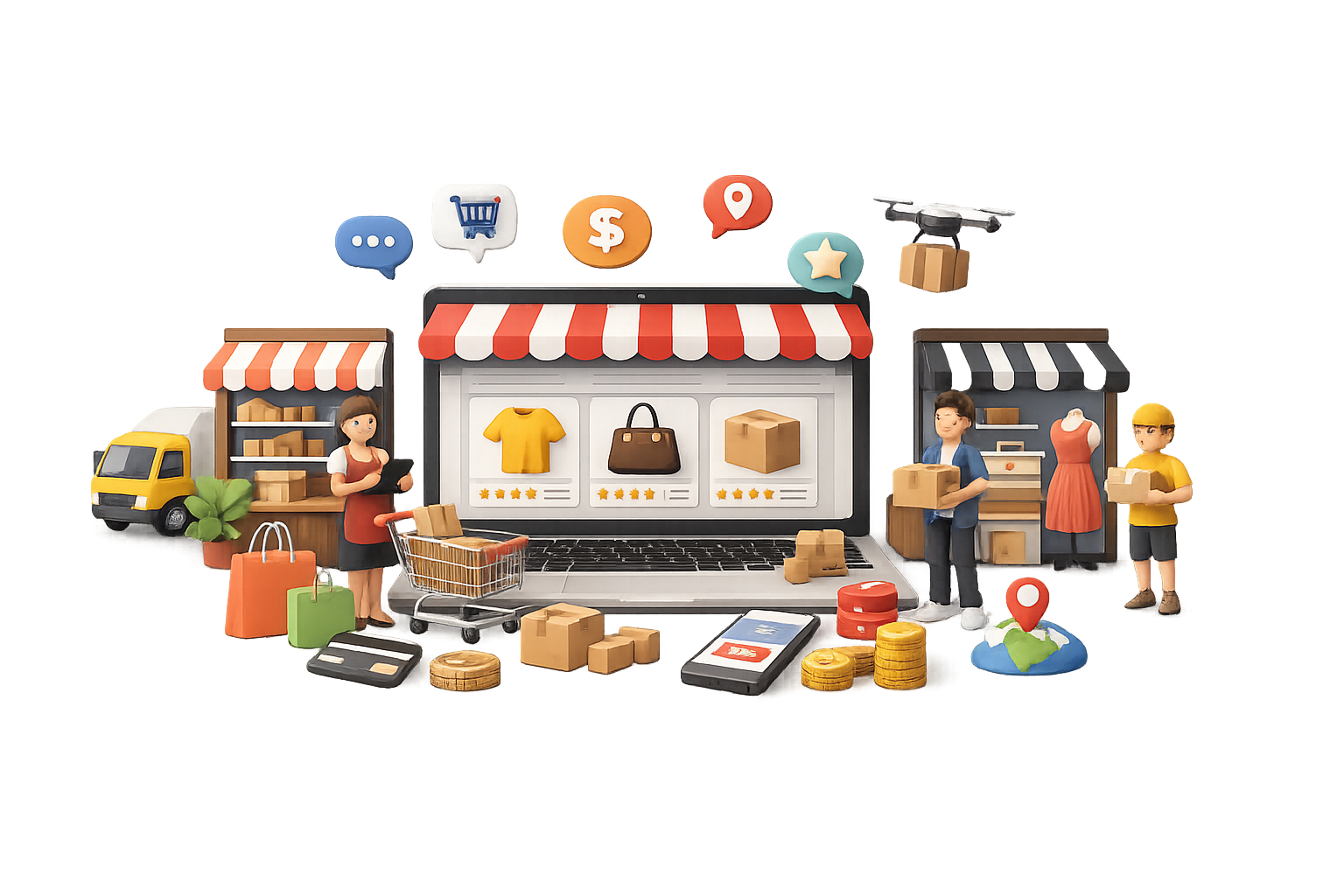
The way people shop online has shifted from visiting single-brand websites to exploring platforms that offer everything in one place. This shift has created a strong demand for multi-vendor e-commerce marketplaces platforms where multiple sellers come together to offer their products under one digital roof.
Instead of managing inventory, logistics, and product variety alone, businesses can now build a marketplace that allows vendors to handle their own operations while the platform owner focuses on growth, user experience and revenue generation.
A multi-vendor e-commerce platform is an online marketplace where different sellers register, create their stores and sell products directly to customers. The platform owner acts as an intermediary who provides the infrastructure, manages the system and earns through commissions or other monetization methods.
In simple terms, it’s a digital marketplace where:
This model is widely used because it reduces the burden on a single business while expanding product offerings significantly.
A multi-vendor marketplace runs on a structured process that ensures smooth interaction between vendors and customers.
Sellers register on the platform, submit their details and get approval from the admin to start selling.
Each vendor can create their own store, upload products, set pricing and manage stock.
Customers browse products from multiple vendors, compare options and place orders.
Orders are automatically assigned to the respective vendors, who handle packaging and delivery.
The platform earns through commissions, subscriptions or featured listings.
This system creates a self-sustaining ecosystem where growth is driven by both vendors and customers.
The platform owner doesn’t need to maintain stock. Vendors bring their own products, allowing the marketplace to scale quickly.
More vendors mean more variety, which attracts a larger audience and improves customer satisfaction.
Since vendors handle inventory and shipping, the platform avoids heavy operational expenses.
Marketplace owners can earn through:
A platform with multiple sellers and products keeps users engaged and encourages repeat purchases.
A successful marketplace depends on strong features that support all users.
A dedicated panel for vendors to manage products, orders, earnings and analytics.
Full control over vendors, commissions, approvals, and platform activities.
Helps customers find the right products quickly using categories, price filters and keywords.
Supports multiple payment methods while ensuring safe transactions.
Builds trust and helps customers make better decisions.
Real-time updates on order status improve the customer experience.
A responsive design ensures smooth usage across all devices.
Multi-vendor marketplaces create strong opportunities for sellers.
Vendors gain access to a large customer base without investing heavily in marketing.
They can start selling quickly without building their own website.
The platform handles hosting, maintenance and updates.
Being part of a larger marketplace boosts visibility and sales chances.
Customers enjoy convenience and choice when shopping on multi-vendor platforms.
Access to multiple brands and products without switching websites.
Competition between sellers leads to competitive pricing.
Customers can compare features, prices and reviews before buying.
User-friendly design and features make the process smooth and enjoyable.
While the model is powerful, it also requires proper management.
Ensuring all sellers maintain quality standards can be challenging.
Handling issues like returns, refunds and disputes requires a clear system.
Regular updates and security checks are essential.
Maintaining uniform quality across multiple vendors is crucial for brand reputation.
The marketplace model continues to evolve with new technologies and trends.
Businesses that adapt to these trends will stay ahead in the competitive e-commerce landscape.
Multi-vendor e-commerce offers a scalable and efficient way to build a powerful online marketplace. It allows businesses to grow faster, reduce operational complexity and create a dynamic ecosystem of buyers and sellers.
With the right strategy, features and technology, a multi-vendor platform can become a long-term, profitable digital asset.
If you are planning to build your own multi-vendor marketplace, explore more at:
https://mlmengine.com/