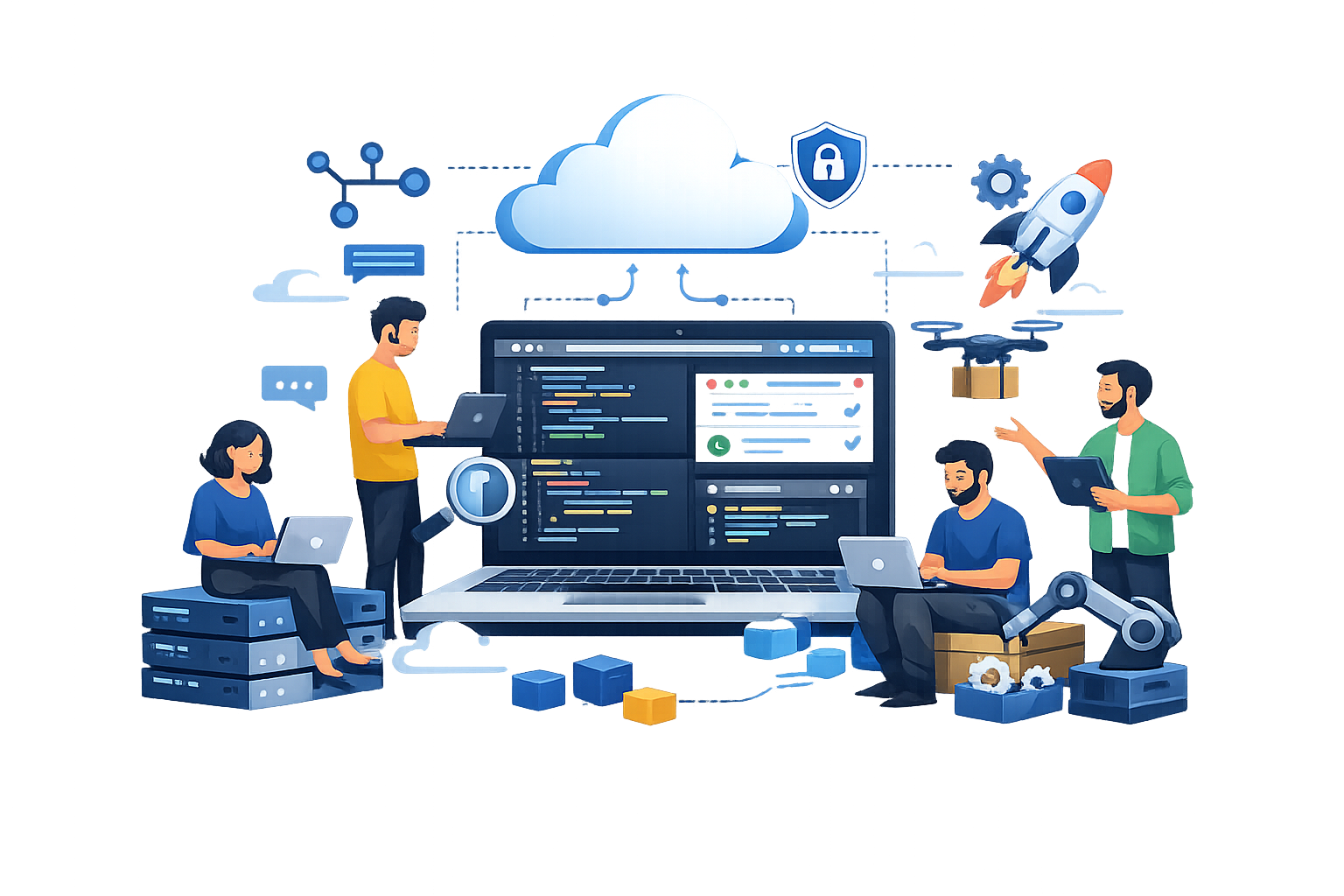
Software development is no longer limited to a single office, a fixed device or a nine-to-five schedule. Today’s development teams work across cities, countries and time zones. In this environment, a cloud-based code collaboration platform has become one of the most important tools for developers, testers, designers and project managers.
From real-time editing to version control and seamless deployment, these platforms are transforming how software is created and managed. Whether you are a startup founder, a freelance developer or part of an enterprise engineering team, understanding the value of cloud-based collaboration can help improve productivity, code quality and team communication.
A cloud-based code collaboration platform is an online environment where developers can write, edit, review and manage code together through the internet. Instead of storing projects locally on individual machines, the source code and development workflows are hosted on cloud infrastructure.
These platforms allow multiple users to:
Popular examples include platforms that support Git repositories, live coding sessions, CI/CD pipelines and team communication features.
Traditional software development often involved sharing files manually or working on isolated systems. This created problems such as version conflicts, delayed updates and communication gaps.
Cloud collaboration solves these challenges by creating a centralized workspace where every team member stays connected to the latest project updates.
Developers can work on the same project simultaneously without overwriting each other’s work. Changes are synced instantly, making collaboration faster and smoother.
For remote teams, this is especially valuable because it reduces delays and improves coordination between frontend, backend, QA and DevOps teams.
Version control systems help teams keep track of every code modification. Developers can:
This ensures transparency and reduces the risk of losing important work.
Cloud platforms eliminate the need for complicated local setups. Team members can start coding from almost any device with internet access.
Many platforms also include:
All these features help developers spend more time building and less time managing infrastructure.
Modern cloud collaboration platforms provide secure authentication, encrypted storage and automated backups.
Role-based access control ensures that only authorized users can view or modify sensitive projects.
In case of hardware failure or accidental deletion, cloud backups help recover data quickly.
Cloud platforms often integrate with:
This creates a unified workflow that improves development efficiency.
Choosing the right platform requires understanding the features that truly matter.
Developers should be able to collaborate on code simultaneously with minimal latency.
A strong review process helps maintain code quality and reduces bugs before deployment.
Automation speeds up testing, integration and deployment while reducing manual errors.
The platform should work across desktops, tablets and browsers without compatibility issues.
Look for features such as:
The platform should support growing teams and larger codebases without performance issues.
Remote work has changed the software industry dramatically. Teams are now expected to collaborate effectively regardless of physical location.
Cloud-based development environments allow developers to:
This flexibility improves work-life balance while enabling companies to hire talent globally.
Despite many advantages, there are still some challenges organizations should consider.
Since the platform is cloud-based, a stable internet connection is essential.
Storing source code online may raise concerns about unauthorized access or data breaches. Choosing trusted providers with strong security practices is important.
Some advanced collaboration tools may require training for new users, especially teams transitioning from traditional development environments.
Enterprise-grade platforms with premium features can become expensive as teams scale.
The future of cloud development platforms looks highly promising. Several emerging trends are shaping the next generation of collaborative coding.
Full-featured development environments inside web browsers are becoming increasingly popular.
Collaboration platforms are expanding to support non-technical users through visual development tools.
Security is being integrated directly into development workflows to detect vulnerabilities earlier.
Future platforms may optimize collaboration for distributed cloud and edge environments.
To maximize efficiency, teams should follow structured collaboration practices.
Define how branches are created, reviewed and merged to avoid confusion.
Maintain clean and readable code with shared formatting guidelines.
Automated tests reduce deployment risks and improve software quality.
Good documentation helps onboarding, troubleshooting and long-term maintenance.
Peer reviews improve code quality and encourage knowledge sharing across the team.
Cloud-based code collaboration platforms are reshaping software development by making teamwork faster, smarter and more efficient. They support remote work, improve transparency, simplify deployment workflows and help teams deliver high-quality applications at scale.
As businesses continue to adopt digital transformation and distributed work environments, cloud collaboration tools will become even more essential for successful software development.
Organizations that invest in the right collaboration platform today are better prepared to innovate, scale and compete in the rapidly evolving tech landscape. To explore advanced digital business and software solutions, visit MLM Engine