Businesses face constant pressure to connect with customers in meaningful ways, build strong relationships, and increase conversions all while managing limited time and resources. Relying on manual marketing efforts can quickly become overwhelming and inefficient.
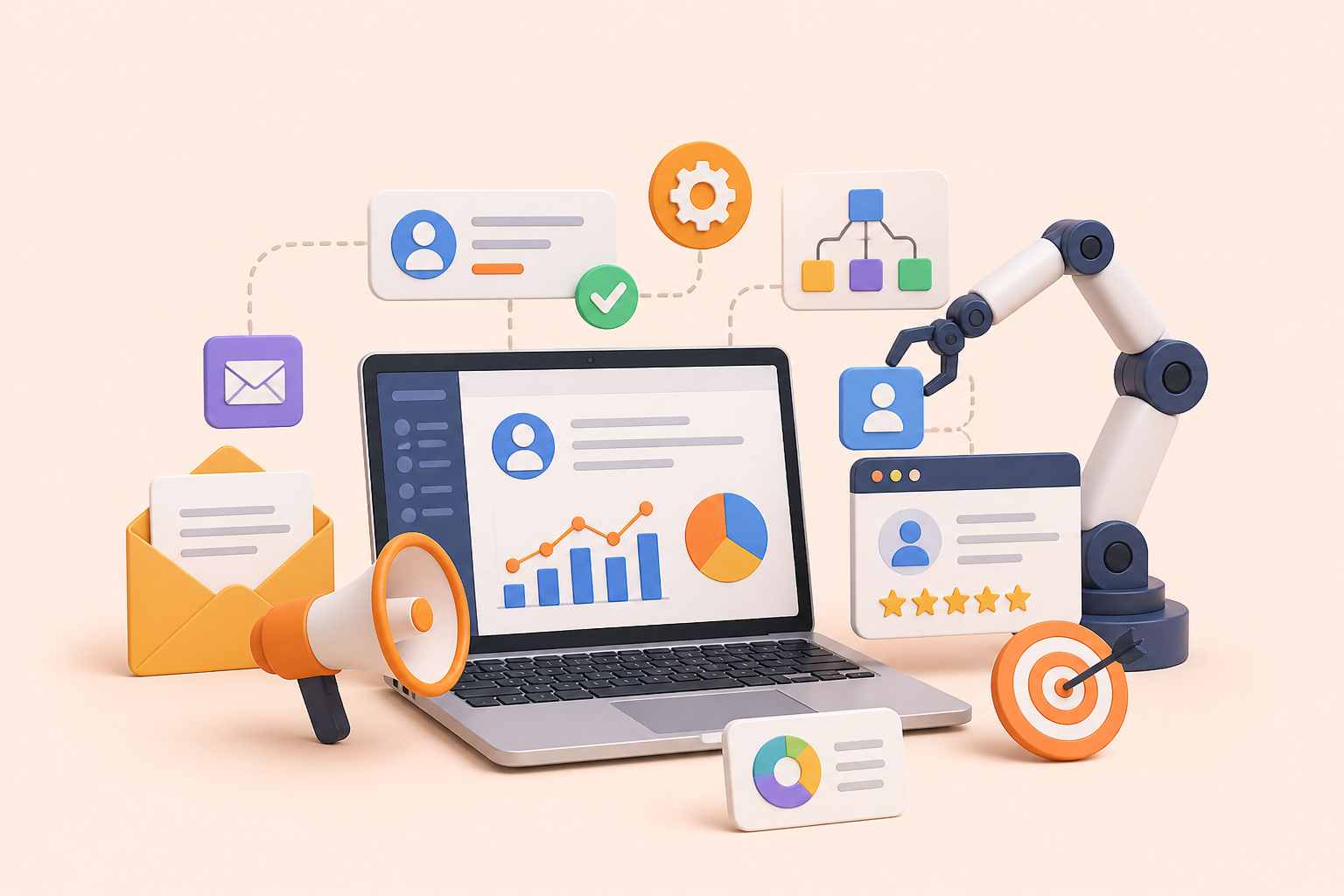
SaaS-based marketing automation tools address this challenge by streamlining workflows, automating repetitive tasks and enabling personalized communication at scale, helping teams work smarter without added strain.
A SaaS (Software as a Service) marketing automation tool is a cloud-based platform designed to streamline, automate and measure marketing tasks and workflows. Instead of relying on manual efforts, these tools help businesses execute campaigns across email, social media, websites and more all from a single interface.
Because they’re hosted in the cloud, there’s no need for installation or heavy IT infrastructure. You simply log in and start managing your marketing operations efficiently.
Marketing today is more complex than ever. Customers expect personalized experiences, timely responses and consistent engagement across multiple channels. Managing all this manually is not just difficult it’s nearly impossible at scale.
SaaS-based marketing automation tools solve this problem by:
This allows marketing teams to focus more on strategy and creativity rather than execution.
Not all tools are created equal, but most effective marketing automation platforms include a set of core features:
1. Email Marketing Automation
Schedule and send targeted email campaigns based on user actions, such as sign-ups or abandoned carts.
2. Lead Management and Scoring
Identify high-quality leads by tracking engagement and assigning scores based on behavior.
3. Customer Segmentation
Group users based on demographics, interests or activity to deliver more relevant messaging.
4. Workflow Automation
Create automated workflows that trigger actions like emails, notifications or updates based on predefined conditions.
5. Analytics and Reporting
Measure campaign performance with detailed reports, helping you understand what works and what doesn’t.
Scalability
Whether you’re a startup or an enterprise, these tools grow with your business without requiring major upgrades.
Cost Efficiency
Subscription-based pricing eliminates the need for large upfront investments.
Accessibility
Since everything is cloud-based, teams can access the platform from anywhere, enabling remote collaboration.
Improved Customer Experience
Personalized and timely communication enhances customer satisfaction and loyalty.
Higher ROI
Automation reduces manual effort and increases campaign efficiency, leading to better returns.
While the advantages are clear, there are some challenges businesses should be aware of:
The key is to strike the right balance between automation and human touch.
Selecting the right marketing automation platform depends on your business needs. Consider the following factors:
Start with your goals and choose a tool that aligns with your marketing strategy rather than chasing features you may never use.
As technology continues to evolve, marketing automation is becoming more intelligent. With the integration of AI and machine learning, these tools are now capable of predicting customer behavior, optimizing campaigns automatically and delivering hyper-personalized experiences.
Businesses that adopt these technologies early will have a significant competitive advantage in the market.
SaaS-based marketing automation tools are no longer a luxury they’re a necessity for modern businesses looking to stay competitive. By automating routine tasks and enabling smarter decision-making, these platforms empower teams to focus on what truly matters building meaningful connections with customers.
If used thoughtfully, marketing automation doesn’t replace human creativity it enhances it. To explore how such tools can support your business growth, you can visit: https://mlmengine.com/