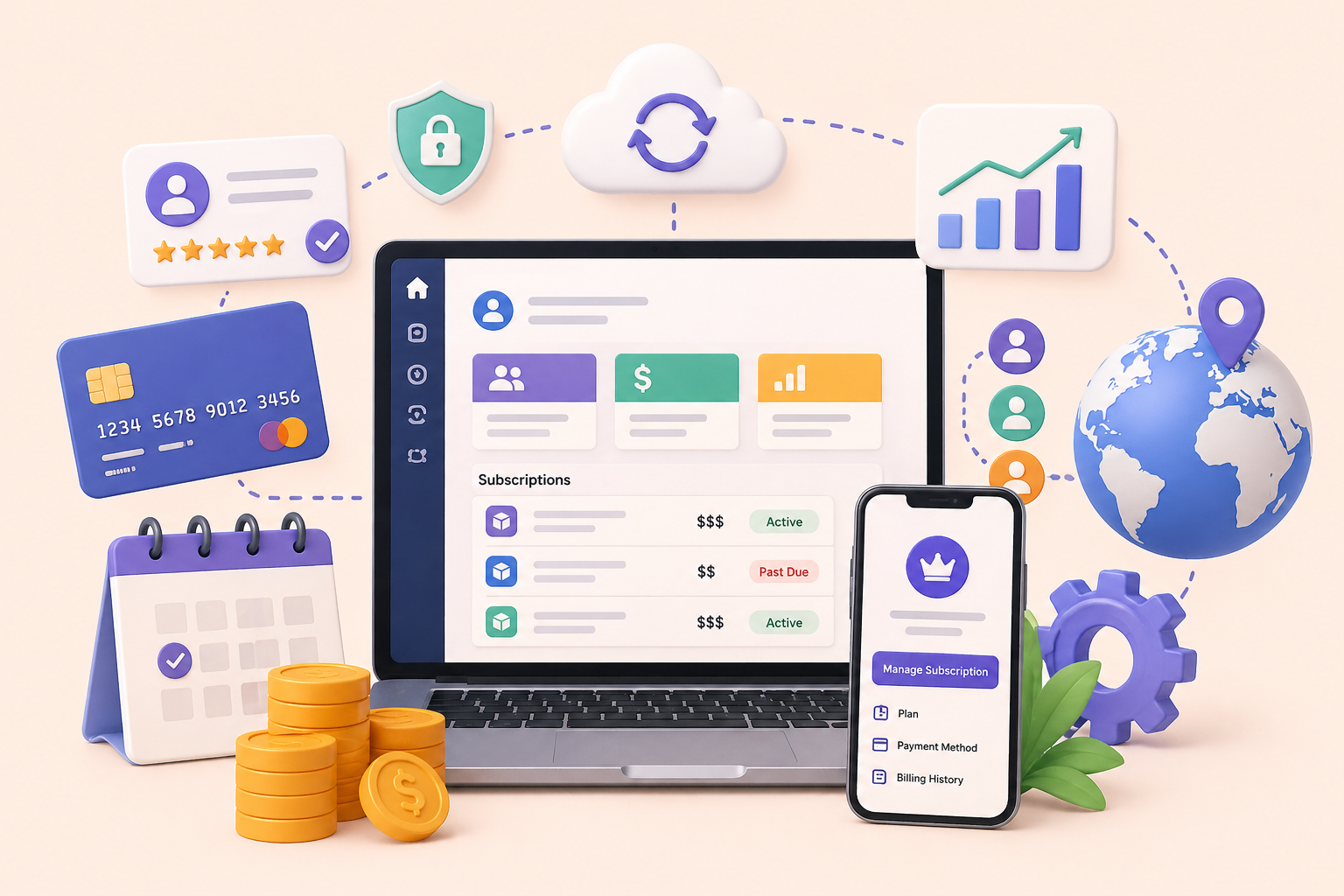
Subscription-based businesses look simple on the surface customers sign up, pay regularly and stick around. In reality, managing subscriptions at scale is anything but simple. Billing cycles vary, customers upgrade and downgrade, payments fail, taxes differ by region and expectations for a smooth experience are higher than ever.
That’s where a Subscription Management SaaS Platform comes in. It acts as the engine behind recurring revenue, helping businesses automate operations while keeping customers happy.
Over the past decade, companies across industries have moved toward subscription models. The appeal is obvious: predictable revenue, stronger customer relationships and opportunities for continuous engagement.
But growth introduces complexity. Without a dedicated system, businesses often struggle with billing errors, poor visibility into revenue and customer churn. A well-built SaaS platform eliminates these bottlenecks.
Not all platforms are created equal. The best ones go beyond basic billing and focus on flexibility, automation and user experience.
Businesses rarely stick to one pricing model. A strong platform should support monthly plans, annual subscriptions, pay-as-you-go models, and custom enterprise pricing all without requiring major system changes.
From generating invoices to retrying failed payments, automation is essential. It reduces manual effort and ensures nothing falls through the cracks.
A customer’s journey doesn’t end after signup. The platform should handle upgrades, downgrades, renewals, pauses and cancellations while giving businesses clear visibility at every stage.
No platform works in isolation. Integrating with CRM tools, accounting systems and payment gateways ensures smooth data flow across the business.
Data is only useful if it leads to action. Real-time analytics help businesses track revenue trends, identify churn risks and optimize pricing strategies.
Modern users expect independence. A self-service dashboard where customers can manage their subscriptions improves satisfaction and reduces support tickets.
Building a subscription platform is not just about features it’s about handling complexity efficiently.
A cloud-based infrastructure is almost a necessity today. It provides scalability, reliability and global accessibility. Many modern platforms adopt microservices architecture, allowing different components billing, user management, analytics to scale independently.
APIs play a crucial role as well, enabling seamless integration with third-party services and making the platform more versatile.
The value goes beyond convenience. A well-designed subscription management system can directly impact growth:
The subscription economy is still evolving and platforms are becoming smarter and more personalized.
Artificial intelligence is being used to predict churn and recommend pricing adjustments. Usage-based billing is gaining traction, especially among SaaS companies. At the same time, embedded payment solutions are making transactions smoother than ever.
A Subscription Management SaaS Platform is more than a backend system it’s a strategic asset. It allows businesses to focus less on operational headaches and more on delivering value to their customers.
As competition in the subscription space grows, the companies that succeed will be the ones with systems that are not only reliable but also adaptable. Building the right platform today sets the foundation for scalable, long-term success. To explore a practical example of such solutions, you can visit https://mlmengine.com/